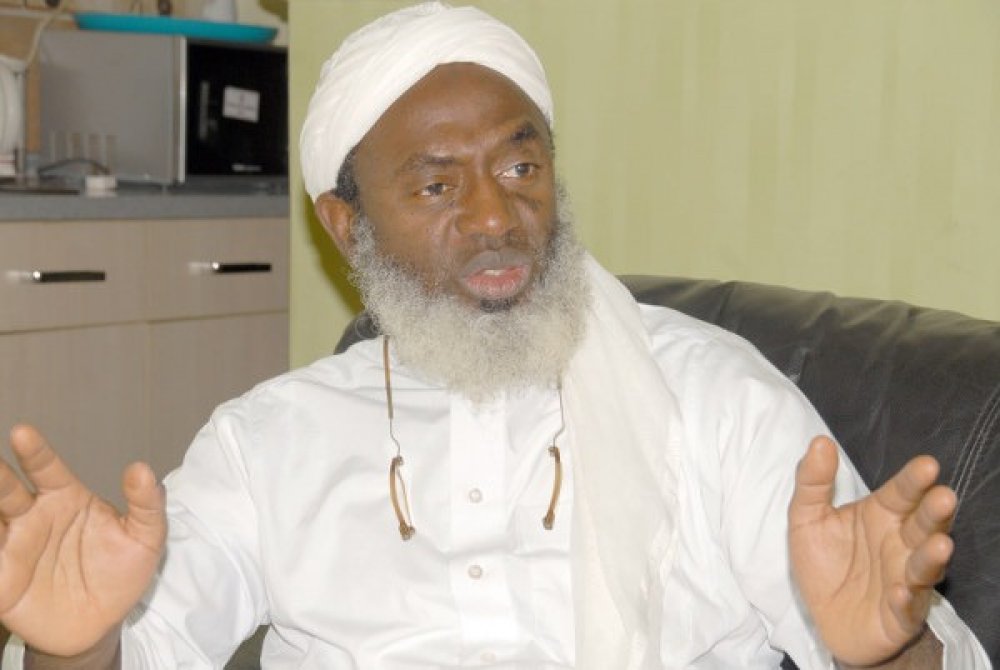
Controversial Islamic cleric, Ahmad Gumi, has defended the continued operation of Sharia law in parts of Nigeria, describing it as both a constitutional entitlement and a religious obligation for Muslims.
Gumi’s remarks followed reports that some members of the United States Congress allegedly submitted a memorandum to President Donald Trump, urging the U.S. government to pressure Nigeria into repealing Sharia and blasphemy laws.
Reacting via his verified social media page on Tuesday, the Kaduna-based cleric maintained that Muslims have the right to be governed by religious principles, just as he claimed the United States protects Christian interests.
“Sharia law is the Muslims’ prerogative, just as the U.S. found it necessary to protect Christians,” he wrote.
Gumi further alleged that Muslims in Nigeria are victims of what he described as “occult terror” imported into the country by unnamed forces. He, however, did not provide details to support the claim.
He also criticised what he termed a global double standard in discussions surrounding religion and governance.
“It’s acceptable for a U.S. evangelical Christian administration to support Israel’s biblical foundation, yet it is haram for Muslims to live by Quranic injunctions,” he stated.
Sharia in Nigeria’s Legal Framework
Sharia law operates alongside Nigeria’s conventional legal system in several northern states, particularly in matters concerning personal status, marriage, inheritance, and other civil issues involving Muslims.
However, the criminal aspects of Sharia law have attracted both domestic and international criticism over the years.
Although the reported submission by U.S. lawmakers has not received an official response from the Nigerian government, the development has reignited debate over the role of religion within Nigeria’s legal structure.
Legal analysts note that Nigeria’s Constitution guarantees freedom of religion and permits states to establish Sharia courts for civil matters involving consenting Muslims.
As of press time, there was no official clarification from the United States Congress regarding the scope or status of the alleged memorandum.
The controversy emerges amid heightened diplomatic sensitivities between Nigeria and the United States, particularly on issues of religious freedom and security cooperation.
Efforts to obtain comments from federal authorities were unsuccessful as of Tuesday night.